The Rise of Alternative Investments
In recent years, investors have increasingly looked beyond traditional markets in search of assets capable of delivering long-term stability, diversification, and resilience during periods of economic uncertainty. Among the growing range of alternative investments, fine wine has quietly established itself as one of the most consistent and dependable performers.
Unlike speculative trends or highly volatile markets, fine wine is built on tangible fundamentals — scarcity, global demand, heritage, and long-term collectability.
Why Fine Wine Holds Long-Term Value
Investment-grade wine occupies a unique position within the luxury asset market. The world’s finest wines are produced in limited quantities by globally recognised estates with decades — and often centuries — of reputation behind them.
As bottles are consumed over time, the remaining supply naturally decreases. Unlike traditional assets that can be reproduced or diluted, the supply of fine wine continually contracts while global demand continues to expand.
This combination of rarity and sustained international demand has historically supported long-term value growth across the market.
Scarcity Drives Demand
Scarcity is one of the most important drivers behind fine wine investment performance.
The leading wine estates in Bordeaux, Burgundy, Champagne, Tuscany, and Napa Valley operate within highly restricted production limits. Vineyard land cannot simply be expanded, and many of the world’s most desirable wines are produced in extremely limited quantities.
As collectors and investors purchase and consume bottles over time, the available supply becomes increasingly scarce. This naturally creates upward pressure on pricing, particularly for sought-after vintages and producers.
In regions such as Burgundy, where vineyard ownership is fragmented into tiny parcels, scarcity has become one of the defining characteristics of the market.
A Tangible Asset With Global Appeal
Unlike stocks, currencies, or digital assets, fine wine is a tangible asset with intrinsic value. Each bottle represents craftsmanship, provenance, heritage, and international prestige.
Investment-grade wine is traded and collected globally, with demand coming from private collectors, merchants, hospitality groups, and investors across Europe, Asia, the United States, and the Middle East.
This international demand base gives the market a level of resilience that many traditional investments struggle to maintain during periods of economic uncertainty.
Fine Wine as a Diversification Tool
One of the major reasons investors continue to explore fine wine is its ability to diversify traditional portfolios.
Financial markets can often move in correlation during periods of instability, leaving investors heavily exposed to wider economic conditions. Fine wine, however, has historically behaved independently from mainstream asset classes such as equities and cryptocurrencies.
Because its value is driven primarily by scarcity, collectability, vintage quality, and global demand, fine wine can offer a degree of insulation from broader market volatility.
For many investors, fine wine forms part of a wider alternative investment strategy focused on long-term wealth preservation.
Inflation Resistance & Wealth Preservation
Fine wine has also gained attention for its ability to retain value during inflationary environments.
Luxury tangible assets have historically performed well during periods of currency devaluation and economic uncertainty, particularly when supported by finite supply and international demand. As inflation rises, investors often seek assets capable of preserving purchasing power over time.
The scarcity and collectability of investment-grade wine have helped support its reputation as a long-term store of value within the alternative investment market.
The Importance of Provenance & Storage
In the fine wine market, provenance is critical.
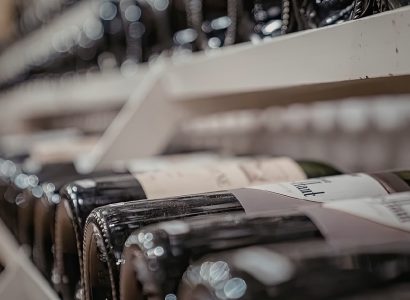
Professional bonded storage, traceability, and condition all play an essential role in protecting investment value. Buyers need confidence that wines have been stored correctly, sourced through trusted channels, and maintained in optimal conditions throughout their lifespan.
Temperature-controlled bonded warehouses not only preserve the physical quality of the wine but also strengthen authenticity and resale confidence within the secondary market.
Without proper provenance and storage documentation, even highly desirable wines can lose significant value.
Why Investors Continue to Turn to Fine Wine
As interest in alternative assets continues to grow globally, fine wine remains one of the most established and respected markets available to investors.
Its combination of scarcity, heritage, international demand, and tangible value has positioned investment-grade wine as a compelling long-term asset capable of offering diversification and resilience during changing market conditions.
At Fine Worth, our approach focuses on disciplined sourcing, professional portfolio management, and access to globally recognised investment-grade wines. Through trusted supplier relationships, secure bonded storage, and ongoing market guidance, we help clients navigate the fine wine market with clarity and confidence.
For investors seeking a tangible asset built on rarity, provenance, and long-term global demand, fine wine continues to stand apart as one of the world’s most resilient alternative investments.
Request Your Complimentary Wine Investment Guide
Click here to request your complimentary Wine Investment Guide and learn more about the global wine investment market.